AI Is Rewriting How Customers Choose Your Business written by John Jantsch read more at Duct Tape Marketing
Catch the Full Episode
Overview
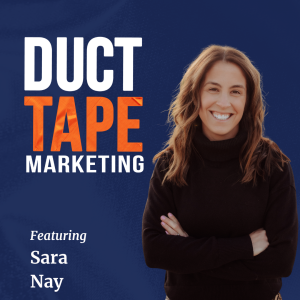 94% of buyers now use AI before they ever land on a website. Sara Nay, CEO of Duct Tape Marketing, joins John Jantsch to unpack what that means for the marketing hourglass, the framework John built over 20 years ago to map the customer journey through its seven stages: know, like, trust, try, buy, repeat, and refer.
The stages haven’t changed, but how buyers move through them has. Nay shares an example: an event organizer looking to book a speaker found her through ChatGPT, compared her against other speakers inside the same conversation, and arrived at the sales call already educated. That shift changes what businesses need to show up with online, from homepage structure and review strategy to how AI itself decides who gets recommended.
This one’s for business owners and marketers wondering why organic traffic feels different lately, and what to do about it.
Guest Bio
Sara Nay is CEO of Duct Tape Marketing. She joined the company as an intern in 2010, worked through nearly every function in the business, and took over as CEO in December 2024. She’s also co-author, with John Jantsch, of Unchanged: Breaking Free from the Broken Marketing Models.
Key Takeaways
- AI search often starts inside a normal Google search. Buyers reading AI-generated snippets are still counted as AI users, even if they never opened an LLM directly.
- The customer journey increasingly happens inside the AI conversation itself, not on your website. Buyers compare options, ask follow-up questions, and self-educate before ever reaching out.
- Homepages need to be restructured for what AI pulls from: FAQs, specific testimonial statistics instead of vague links, and described (not just displayed) credibility logos.
- Reviews matter more than ever. AI pulls trust signals from review sites and directory listings, not just from your own site.
- Authentic, unpolished content (team members, customer stories, unscripted voice) now builds more trust than overly produced content, because so much content already looks AI-generated.
- The back half of the hourglass, repeat business and referrals, is a growing opportunity as the front half gets more competitive and harder to control.
Great Moments
- [01:24] – Nay’s example: how a client found her through ChatGPT, and her takeaways
- [04:07] – Why showing up in AI recommendations still starts with the “know” stage of the hourglass
- [06:16] – Nay’s advice for businesses watching their SEO traffic disappear
- [07:14] – The homepage restructuring AI search demands: FAQs, specific stats, described logos
- [10:29] – Why authentic, slightly imperfect content now builds more trust than polished content
- [12:22] – Case study: $500 a month in ChatGPT ads led to an $18,000 sale with a shorter sales cycle
Memorable Quotes
- “Marketing is clearly changed if you want to look at platforms. But the thing that’s changing the most is the buyer journey.” — John Jantsch
- “AI is pulling in the majority of the content from the home page specifically, so that’s where your most helpful, structured content needs to live.” — Sara Nay
- “The more authentic human reviews and stories you can pull in, the more people are going to want to engage with your company.” — Sara Nay
- “You can’t just be like, let’s get referrals. You need to have all of the other pieces in place so people want to refer you.” — Sara Nay
- “If we weren’t doing things like optimizing our website, producing thought leadership content, and getting on review sites, I wouldn’t have shown up as a recommendation.” — Sara Nay
Resources
John Jantsch (00:01.893)
So, did you know that 94% of buyers now use AI before they ever hit your website? We’re gonna talk about the marketing hourglass today. It still works, but the way buyers move through it has been rewired stage by stage. And the businesses that don’t know which stage is bleeding them out are about to find out the hard way. Hello and welcome to another episode of the Duct Tape Marketing Podcast. This is John Jantsch. My guest today is Sara Nay. She’s the CEO of Duct Tape Marketing.
she joined as an intern in 2010, worked through every function in the business, and took the CEO role in December of 2024. So she is also the author of her own book, Unchanged, Breaking Free from the Broken Marketing Models, that I was a co-author on, but I didn’t really do any of the work. So today we’re gonna talk about that age-old tool, at least it’s age-old for us, the marketing hourglass. So, Sarah, welcome to the show.
Sara Nay (00:59.746)
Thanks for having me back.
John Jantsch (01:01.723)
All right, so I’ve made that claim that ninety-four percent of buyers now use AI. the maybe that’s true, maybe that’s statistics, but how are you seeing it actually happen? Are you seeing it in behavior, you know, not just research? Like, are people coming to you and say, I found you on AI? I mean, anecdotally, are you feeling it? Or when did you start feeling it?
Sara Nay (01:24.512)
Yeah. Well I think that stat something to consider is there’s a lot of people that are using AI search without even really realizing it. So maybe they’re going to Google and they’re reading the AI snippets, so that’s being counted in that statistic. So they didn’t start within an LLM, but they’re still using AI to have those searches. So I think that’s an important piece to note in that stat. But for me, just from a personal experience story recently,
John Jantsch (01:31.874)
Right, right.
Sara Nay (01:48.002)
I got hired for a speaking opportunity that’s coming up next year and the person came to me and when I asked how did you find me as a potential speaker, they said that we went to ChatGPT, I think was their tool of choice and we looked for practical marketing speakers that can speak in a range of industries. Like that was specifically what they were looking for.
But then they had a conversation within ChatGPT because I wasn’t the only name that came up. And so they had a conversation there comparing the different speakers that they proposed and getting deeper on their topics and probably reading different reviews and things they could find about duct tape marketing online. And so then when they came to me to have the initial conversation, it was very different from someone that maybe would have Googled me and then booked a call. Like they were like, okay, we know you talk on these specific topics to these different audiences, and then you also support clients.
beyond initial conversations and these are your services. So they knew so much more about me. So the conversation changed from me educating them about what I potentially could speak about to then basically just having a conversation and getting them across the finish line.
John Jantsch (02:53.843)
You know, the the marketing hourglass I’m gonna pin at about two thousand and five. So over twenty years old. I’ve been talking about this idea. And it really came about from so many people talking about the funnel. So the hourglass was like, hey, what happens after somebody, you know, buys? That was kind of the idea of the shape. It it has evolved. I mean, as as many things have evolved. And I I think it’s interesting because, you know, over that 20-year period, a lot of new things have come along. AI’s the new thing.
that that’s come along. But what I always tell people all the time is what’s changed. I mean, marketing is clearly, I mean, changed if you want to look at platforms. But what I think the marketing hourglass demonstrates is that the thing that’s changing the most is the buyer journey. I mean, if you think about it, the seven stages, no like trust, try by, repeat, and for we used to kind of guide those. We used to think about, okay, now you move person to this stuff. Well what you just explained,
w w they were like they were like through five stages, you know, before they even came to you. So w what do you think that that suggests we need to be doing differently, if because people are actually able to kind of self guide, if you will?
Sara Nay (03:56.439)
Yeah.
Sara Nay (04:07.361)
Yeah. Well, I mean, it all starts with the first stage of the customer journey, as it always has, with no. And so there’s things that you should be focusing on a business as a business to be showing up in these searches. Because if we weren’t doing things like optimizing our website, producing thought leadership content, getting on review sites, having like I saw on LinkedIn like PR is back. And so exploring, you know, getting on other people’s platforms, like if we weren’t doing all of those things, I wouldn’t have shown up.
John Jantsch (04:30.639)
Right.
Sara Nay (04:36.521)
even as a recommendation. And so it still does start with the no phase ultimately because you need to show up there when for AI recommendations. But then from there, a lot of the, as you said, the journey is happening within the platform. So you don’t even know necessarily that someone’s going through your customer journey because it’s happening within Chat GPT or Claude or the tool they’re they’re working in. But like we can help influence
what AI is serving in those things. And so what AI is p pulling in a lot of is is trust components and so reviews on different websites. And so if you’re actively gathering those, those will ultimately be pulled into AI. And so there’s things that we can do to help influence being shown there, but also the types of information that’s being recommended about us once someone actually is having a conversation there. And so before a lot of that was happening on our websites. Now it’s basically AI pulling that
material from our websites but also other directory listings supporting sites from there as well.
John Jantsch (05:36.669)
Well, you know what’s funny about that is is you know, a lot of people just have like, you know, SEO, SEO, it’s everything. Show up in Google. But but what you just described, you know, getting on review sites, p having other people talk about you, PR. I mean, those have always been good marketing things. Like it’s like everybody’s rushing to them now, and because they see the difference they really make, because all of that, like, I don’t know, free organic traffic, you know, that people lived.
with is is sort of disappearing. So what do you say to some of the folks that are that are coming now saying, we invested so much in SEO and now like all our traffic’s disappearing. What do we do now?
Sara Nay (06:16.693)
Yeah. I don’t think that there’s just you need a shift. So one of the things I talk about like with the hourglass changing, the customer journey changing, is there’s like new leaks forming that weren’t there before because of how things are changing in marketing. And so if you were search doing really well with, you know, keyword specific search on Google, but that’s starting to deteriorate with how things are changing, like you need to shift your SEO strategy to be more focused on AEO and showing up in AI search.
but like that’s just one example of the things like hopefully as a part of your SEO strategy, you were doing things like already getting reviews and you were doing things like directory listings and you were hopefully getting backlinks by maybe appearing on different podcasts or whatever the strategy was. So if you were doing proper SEO that’s a little bit more of a diverse approach, then those things should be paying off still. It’s just how you’re structuring content on your website, for example, that has needed to shift and change. And so I saw a study recently that
John Jantsch (07:02.299)
Mm-hmm.
Sara Nay (07:14.943)
AI is pulling in like the majority of the content from the home page specifically. And so we actually had a conversation and in one of the masterminds we’re part of. And what does that mean? It means that we should be having like really helpful content structured in a very specific way on the home page. And that always has been a good practice, but having things like FAQs directly on the home page because that’s the type of content that AI loves to pull from. Or let’s say you have really great testimonials before we might just like
John Jantsch (07:36.945)
Yeah.
Sara Nay (07:44.8)
link to the testimonials from the homepage. Now you should put the actual like statistic that is most impactful about the testimonial on the homepage, but then link to it. Or let’s say you have logos. We’ve always talked about having like credibility logos on the homepage as well. Like instead of just having like the logos for awards you’ve won or associations you’re part of, like you should actually describe those logos as well. And so that stuff can all be pulled into AI versus just visuals that it might not be able to read. And so
It’s structuring and providing content that AI is ultimately looking for on the home page specifically.
John Jantsch (08:21.818)
Yeah, and I think one of the things you you know, you mentioned that the the person that found you for the speaking thing ha you know, people are not just typing small business speakers, right? It’s they typed in all their requirements, you know, that they wanted. And so I think we have to realize that as well, that that, you know, they might even say who costs less than, you know, X amount to speak. I mean, so I think it really makes a case for we have to lay it all on the table now, don’t we?
Sara Nay (08:48.875)
Yeah, exactly. And that’s a good exercise that we’ve talked about, you know, to start with is like literally open the LLM of your choice and start typing in things that you think your customers might be searching for. So if you’re a local business, like let’s say you’re a home remodeler, like best remodeling companies in Boise, Idaho, that’s where I live. and so that might be something that you’re searching for, but also getting more specific, as you said, that specialize in
John Jantsch (08:56.539)
Yeah.
Sara Nay (09:16.065)
Kitchens within this budget and and so like yeah, or yeah, exactly. These neighborhoods specifically, maybe even. And so like start interacting and asking those types of questions within your different platforms at ChatGPT Cloud and see what kind of results come back. Are you listed there? Are you a top result? If so, continue to act like interact and tell me more about this company, like how can I trust them? Can you pull in different reviews and just go through the experience like your customers would
John Jantsch (09:18.234)
Work in older homes, yeah. Right, right.
Sara Nay (09:43.392)
And A, if you’re not showing up as one of the solutions, that’s something to focus on. but B, if you are great, okay, how can you continue to feed it more content or present more content to be pulled in that will continue to s tell the story in the way that you want it to be pulled ultimately?
John Jantsch (09:59.601)
I think it’s really interesting to see the impact of review copy. So you get some of these home service companies get reviewed all the time. So you see some of these home service companies and now three, four, five hundred reviews. And dang, do those reviews talk about what’s important to people a lot of times. You know, they’ll say exactly like they cleaned up the job site or they didn’t let our dog out. I mean, that’s the stuff that that that we don’t think about. But that is is that the stuff that needs to start showing up on our home pages as well.
Sara Nay (10:29.965)
Yeah, absolutely. And I think that’s another thing. Like we’re when we’re talking about the hourglass, one of the core stages is trust. So no like trust. And so that’s the component that we’re talking about right now. I think one of the ways trust has changed is creating content is is easy, it’s cheap, it’s fast now in a lot of cases. So more and more people are just creating content. I’m not saying it’s good content, but they’re creating content. And a lot of the content is starting to like look the same, feel the same.
Pictures are over edited, videos are done by AI and everything is perfect. And so when you can actually bring in like humans that have worked for like with you and also humans that work for you that are on your team, like that’s the type of stuff that people are craving. Like they wanna hear, they wanna hear about the people that they’ll be working with. And so they wanna hear about your team, but they also wanna hear about
Joe that had the same problem that was solved by working with you as well. And so the more like authentic human reviews and stories you can pull in, the more people are gonna wanna engage with your company versus something that just feels generic and perfect and overly polished.
John Jantsch (11:40.828)
You know, when when Google first came around, I think you might have been in grade school. the it was great, right? It was free. Look at this, it’s a great information. And then all of a sudden these ads started showing up. I I’m guessing the you know, the AI tools are going to bring ads right now, Chat TPT, I think you actually I think you actually shared a a case study that
Sara Nay (11:46.701)
Yeah.
John Jantsch (12:08.261)
somebody’s actually a client is actually running some ads on ChatGPT and with some success. do you see that as is that gonna be the future of buy like so many people depended on Google ads for buy?
Sara Nay (12:22.719)
Yeah. I think it’s just another step you can take right now. there’s not a ton of people from from what I’ve heard testing with Chat GPT ads yet. And so it is somewhat inexpensive today. It probably will change like all things have in different platforms. but the case study that I reference is we we just lightly started testing ads like $500 a month for an artificial turf client of ours.
and the thing that was great about that is we were testing again five hundred dollars a month. He had a one of his largest sales recently in the last few years, which was around eighteen thousand for that sale, happened within a few weeks. And so there was two things that stood out to me. And that is A, it was one of his his larger sales, and then B, his sales cycle was shorter than any other recent sale. And so why do we think that happened? We don’t
John Jantsch (13:14.13)
Yeah.
Sara Nay (13:16.309)
obviously know for sure, but based on everything that we’ve talked about today, I believe it’s because someone was searching for something very specific to what he did. His ad came up and then they continued to interact there and self-educate before they had a sales conversation with him. And so the sales cycle was able to be shorter because they already had so much more information going into that call.
versus again, maybe someone that just like Googled him, found the number and called, you’re starting from step one. And so that’s an example. Like I I think that focusing on organic being pulled in to AI organically is step one in my mind because that’s important because even if someone sees your ad, they’re gonna probably interact and want to know more. So still step one is focusing on how you can be visible there. But I think there’s an opportunity right now to then layer on ads
to be able to be shown just in a different way into more people.
John Jantsch (14:13.553)
Well, I think you make a really good point too, because an ad may actually send somebody to your website or something, but if you don’t have the information there, if you don’t have a good process for like quoting or something, you know, you’ve still got to have all the goods there, or you’re just, you know, you you can’t just depend on an ad selling. You know, an ad can maybe create some some attraction, but that’s about it. You know, one of the to me, probably the most important stage of the hourglass has always been trust. and
Today, at least in this little window we’re in right now, if somebody goes to AI or goes to just even Google and it and says the best blah, blah, blah, and Google gives them three answers. Right now it feels like people really trust those answers in that they’re getting from AI. So in other words, if you’re not showing up in those, you know, it’s gonna be very hard to get chosen. how do you think we have to start thinking about, you know?
trust if if we’re sort of invisible in a way if we’re not showing up in those like three choices that that that particular LLM happened to decide were were worthy.
Sara Nay (15:24.277)
Yeah. I think there’s different components in trust. I mean, for one, like we talk a lot about like thought leadership content. So owning your own point of view and perspective on the inner industry and creating content on a consistent basis. Like that’s gonna build trust and credibility when someone’s on your website, when they’re following you on socials, when they’re searching for things in AI and your content’s pulled in. And so I think that’s still absolutely relevant. I think that focusing on getting as many reviews as possible.
John Jantsch (15:35.964)
Right.
Sara Nay (15:53.784)
from clients is a huge component of that. So it’s like producing yourself as someone trustful by thought leader content, but then it’s also getting other people’s perspectives is step two. But then I would even say like step three then is how else can you build trust? Again, it’s by actually having humans behind your brand, all like actually having like videos of your website.
so people can get to kind of know and like and trust you a little bit there. It’s not being overly polished. It’s maybe stumbling over things and making typos from time to time. So people see that authenticity and they want to connect with you. So I really think of of of trust, it hasn’t necessarily changed, but by putting yourself out there as a human, I think that has become more important. And then I do think like we’ve, you know, for as long as I’ve been at duct tape marketing
16 years now, we’ve talked about the importance of reviews. that’s that’s just becoming more and more and more and more important in the age of AI.
John Jantsch (16:53.693)
One of the things that nobody says, I mean, everybody says get more reviews, right? But you’re not going to get a lot of great reviews unless you’re delivering. And I think the back half of the hourglass is I think is a real opportunity. If it’s getting harder to be found, to be chosen, than retaining those clients, getting repeat business, actually having processes for referrals, the whole back half of the hourglass, I think actually may become even more significant. So
You know, how do you convince a client who’s just like, No, I need the phone to ring, you know, to focus on those things.
Sara Nay (17:28.491)
Yeah. I mean, that’s a it’s something that I get asked all the time because a lot of times when people come to us, they’re like, We just need more leads, and I’m like, Well, are you nurturing the current leads? Are you moving them through the customer journey effectively? Are you selling more to them once they become clients? Are you turning them to referral sources? And as you said there, like the way you ultimately get referrals is you take care of someone throughout the whole entire customer journey. So I agree with you, like the referrals piece is getting more and more important, but you can’t just be like, All right.
Let’s get referrals. You need to have all of the other pieces in place so people want to refer you ultimately. And so I always talk about like you know, really looking at the whole experience. How are you getting people to know like trust, try by, repeat? So then when you ask for the referral, you maybe don’t even have to ask at that point because they’re blown away. And so I think some of the things that you can do, you know, when you’re thinking about the referrals piece.
is obviously as you said, putting structure and process behind it, like knowing when to ask and how to ask and how to educate people on like type of referral sources you’re looking for. Like that’s all really important. But I also think if you can think about, okay, let’s look at our customer journey and how can we put things in place that will blow people away when they’re not expecting it. So they just naturally tell friends and family about it as well. So I think a good repr referral program has structure
has process, but it also has like surprise and delight throughout. So people just don’t have to wait for the referral. And so for example, like when you think about the buy phase, a lot of times people are like, okay, we got their money, we’re good. But it doesn’t stop there. Like how can you like there’s a lot of buyer’s remorse in a lot of different business? Like someone pays for something like, was that the right decision? That’s your opportunity to like, heck yes, it was the right decision and here’s why.
by onboarding someone effectively, by communicating with them really well, by letting them know that this was the right decision, and by, you know, maybe sending them a small bonus or gift or gesture that they weren’t expecting. And like those are the moments that people are going to say, you know, I I signed up for this company and not only did they like communicate throughout the whole process, I knew exactly what they were going to do, they sent me this thing and now I’m sharing it on social media because it blew me away. So again, the referral
Sara Nay (19:42.357)
There’s a lot that goes into referrals. It’s having a a tightened customer journey. It’s surprising people throughout the way, delighting people throughout the way. And then it’s having structure to ask for them in the right moments.
John Jantsch (19:53.471)
Yeah, and again, that to me is a form of lead generation. So people need to look at it, obviously that way. And and the beauty of those kind of leads, too, is probably not going to be as price sensitive. They’re sort of already sold. you know, so I mean it’s it’s a much better way to do business, but a lot of people just are conditioned, you know, to like how do we get more, you know, people in the door type of of of approach. So if if you start working with a business around this idea of the hourglass.
Kind of what’s what’s the first step? I mean, do you do you kind of map it out and help them find like all the gaps they have or the things they haven’t even thought about?
Sara Nay (20:30.977)
Yeah, absolutely. So whenever you’re thinking about your customer journey or hourglass, the first step is to understand like what your current journey looks like today. And so an exercise we love working with clients is literally just sitting down and say, Okay, how do people get to know your business or businesses like yours? Like what are all the things they could be doing? Would they be responding to an ad, receiving a referral from a friend, you know, whatever it might be. And so you’re brainstorming like all the possible things that people
that your customers or clients might be doing in each of the stages. But then the second part of that is saying, okay, what are we currently doing? we aren’t running paid ads. Maybe that’s an opportunity to to to explore and consider. so really just brainstorming what customers or clients are doing in each of the stages and then what you’re currently doing and then identifying where your gaps might be. And all the time when we go through this exercise, we see people are doing stuff for no, like people know they need
awareness in a lot of cases. They know they need to get in front of people. But then they kind of skip through, like, trust, try, and then they like hope people will buy. and then they hope people will stay and buy more. And then they kind of hope people will refer. And so that’s just a a bit of an extreme example. But that’s where we see a lot of the gaps is after the no phase and then after the buy phase is where you often see people just not emphasizing as much as they could be.
John Jantsch (21:53.542)
Awesome. Well, since I know what your call to action should be, I’ll go ahead and put put it out there for you. If you’re listening and you want to actually go through that exercise with Sarah, it’s just duct tape marketing, d-u-c-t-a-p-emarketing.com, and there’ll be a link right in right at the top there. Schedule a strategy call. and you can work through that hourglass with Sarah if you’re a a business that is
Sara Nay (22:01.026)
Do it.
John Jantsch (22:20.53)
having some success, but you want to go the next level, this is an absolutely great place to start. So Sarah, appreciate you joining me from Boise, Idaho. I was gonna say Ohio. Idaho Ida Idaho and hopefully we’ll run into you one of these days soon out there on the road, which I know I
Sara Nay (22:31.297)
I know you were there.
Sara Nay (22:39.79)
Thank you.
Sign up to receive email updates
Enter your name and email address below and I’ll send you periodic updates about the podcast.